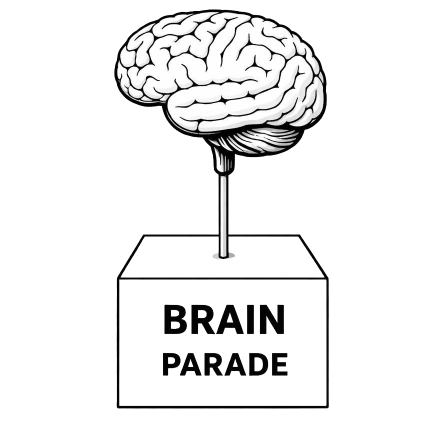
The brain parade

The Brain Parade is a cultural and educational project that connects art and health to raise awareness about migraine in a creative and accessible way.

Conceived by Dr. Mario Peres and Dr. Juliane Mercante, and organized by ABRACES (Brazilian Association of Cluster Headache and Migraine), Brain Parade was born from the desire to bring migraine out of invisibility.

Dr. Mario Peres

Dra. Juliane Mercante


Migraine is an invisible neurological condition that affects around 1 billion people worldwide and 33 million in Brazil. Despite its prevalence, it remains underdiagnosed, poorly understood, and frequently neglected.

Migraine is among the leading causes of disability globally, ranking 2nd for adolescents and young adults and 5th for adults. It accounts for 88.2% of the impact caused by headaches.

Brain Parade aims to change this perception, raising awareness and educating society about the importance of recognizing and treating migraine seriously. It is an innovative initiative that brings together health, education, and art, helping to foster empathy and support for people living with migraine..

Human brain sculptures made of fiberglass and resin, personalized by invited Brazilian artists.

The artworks will be showcased during the International Headache Society Congress (IHC2025), the largest international headache congress, taking place from September 10 to 13, 2025, at the WTC in São Paulo, alongside the Brazilian Headache Congress.

After the exhibition, the sculptures will be auctioned, with the proceeds donated to ABRACES, further amplifying the project’s social impact.

Raise Awareness:
Promote knowledge and understanding about migraine and its symptoms.

Inspire Empathy:
Draw attention to an invisible condition, fostering compassion for those who live with it.

Support:
Direct the funds raised to benefit ABRACES, strengthening support and research initiatives.

Unite Art and Health:
Bring together specialists, artists, and the public around a common cause.

Migraine is an invisible illness: it leaves no visible external marks, yet causes intense suffering and disability. Precisely because of its invisibility, it is often minimized or misunderstood by society.

Using the model of a brain gives tangible form to this reality. It represents that migraine exists, can be measured, and has real impacts on people’s lives. Each sculpture symbolizes that the pain is not “in the head” as a metaphor, but in the brain itself—based on clear and measurable biological foundations.

Migraine profoundly affects quality of life: it limits personal, professional, and social activities, causing loss of productivity and silent suffering. By bringing the brain as an icon, we show that this is not a matter of weakness or exaggeration, but a neurological disorder with great human and social impact.

Moreover, scientific advances have shown that there are brain mechanisms—from alterations in neural circuits to the activation of specific pain and inflammation pathways—that explain the occurrence and worsening of migraine attacks. In other words, the brain is not just the stage, but also the biological protagonist of migraine.

Thus, the brain sculpture serves as a symbol of awareness: it gives visibility to the invisible, transforms science into art, and helps society recognize migraine as a legitimate and significant brain disease.